Friday, November 1, 2013

Exciting Times in the Philippines


To finish off on highlights of the tour from the last blog, across the street from the National Heritage Park was the Yap-San Diego House built in 1675 and considered one of the oldest residences still existing in the Philippines.  The furnishings are mostly from the original owners and include family portraits, exquisite paintings, lavish table settings on hand-crocheted table cloths, along with family heirloom gods, furniture, dolls, and everyday household items of the era.


                                             Above on the right is the "birthing chair".


Next we went to the Basilica Minore del Santo Ninyo, a 16th century church built on the spot where the oldest Christian relic in Cebu was found—the Santo Nino de Cebu (Holy Child Jesus) —whose spirit is believed to protect the island even today.


We finished up the tour at Magellan’s Cross planted to mark the site of the baptism of the first Christian Filipinos led by Rajah Humabon.  Planted in the 16th century, the original cross is encased inside the cross found in the center of the chapel built to protect the original cross. 


                                                                                This is our tour group at Magellan's cross chapel.

The next thing that happened was we ran into a strange time warp.  During the first week of October,  we went to the mall.  We saw on one side a huge display of Halloween costumes, on the other side a huge display of Christmas trees and Santa Clauses, and in the center (but 4 stories down) was a huge flower show complete with ribbons for winners of different categories!  The flower show included the show and sale of many different kinds of flowers, plants, and trees – not just flowers.  Those three seasons just don't coincide back home!


Took time out to get a haircut and it was (like everything else here in the Philippines) an occasion for much picture taking!

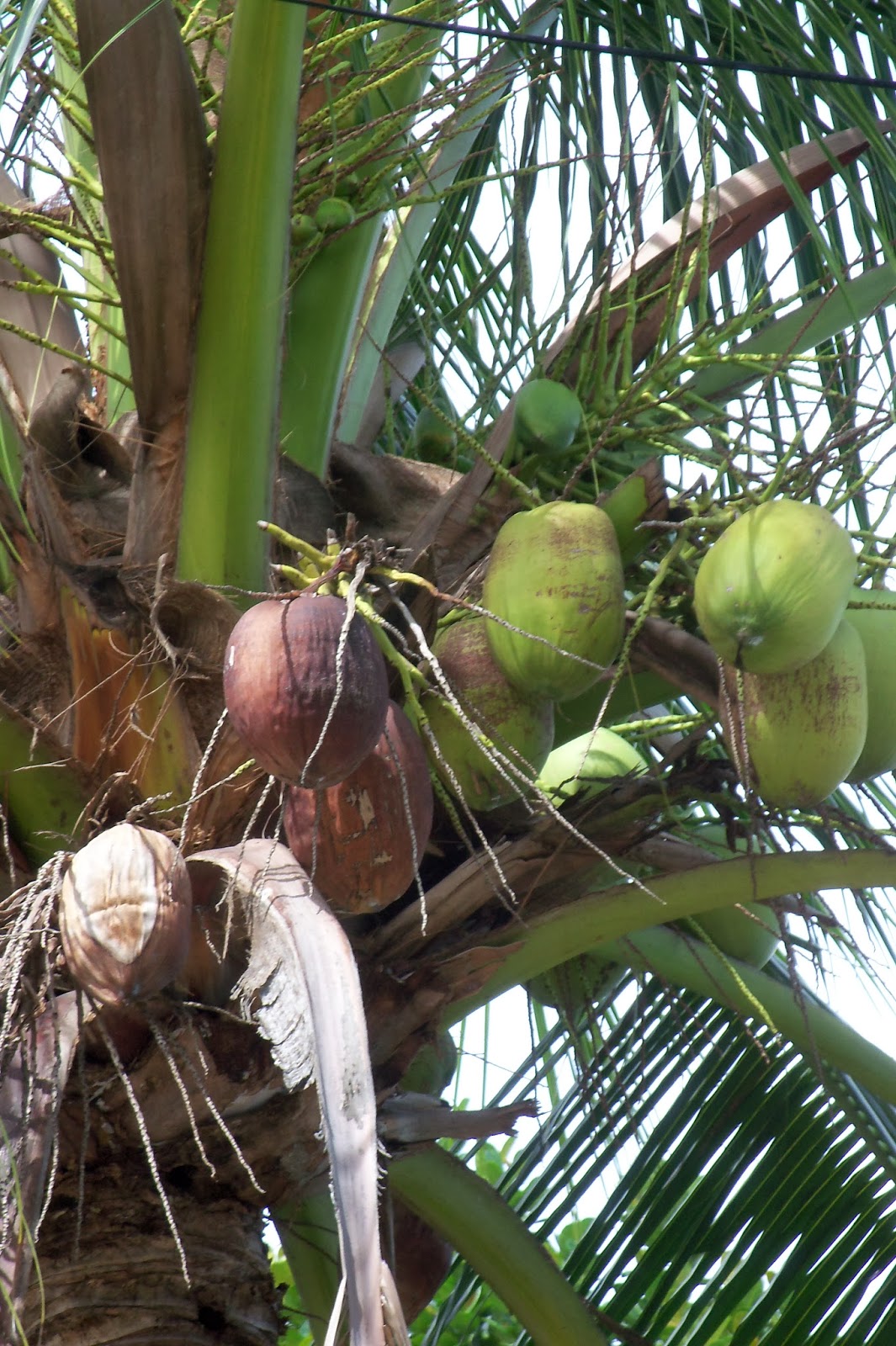
Also went for a stroll in a small gated community just down from our apartment (or “up” from us if you are talking economics).  It is very pretty and some of the houses are very nice.  Quite a few of them had their own coconut and banana palms - along with high fences and gorgeous flow


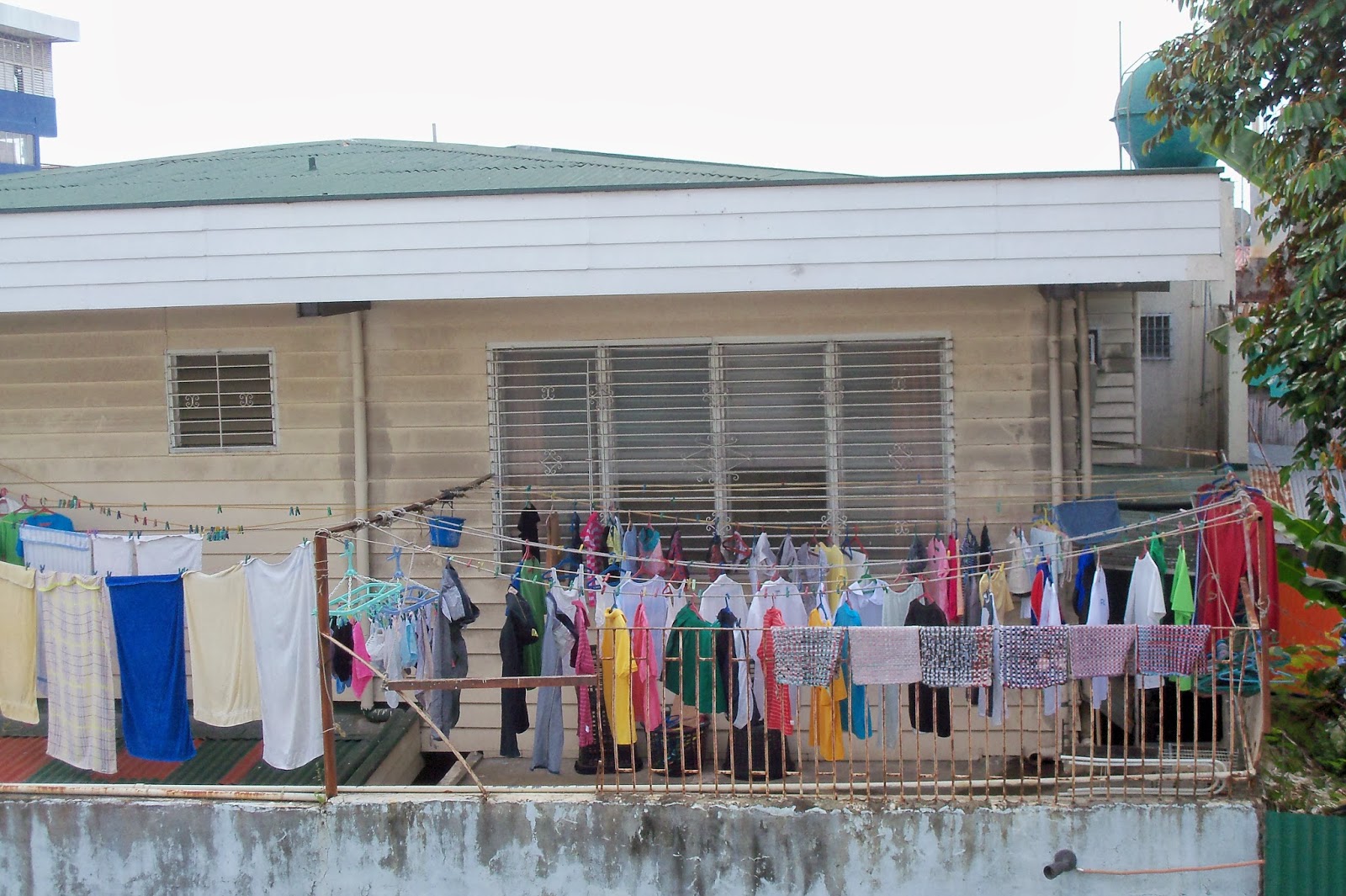
 My mom would really like this "front porch"!
Our first Jeepney Ride


Some Interesting Jobs in Cebu

 Lumber Delivery

                                                                                          Adverising Specialist

International Chess
Champion


Sign Installation
Street Musician -- and they can really make their homemade drums make music-- actual notes, not just percussion.
"Walking Dresser" -- or furniture delivery             

Water Melon Carver
                         Laundry


 Build Your Own Harp from Recycled Materials 

            And Teach Yourself to Play

Cement Mixer


Soon to be famous basketball player.


                                           Baloon Delivery                                                   Telephone Post-Hole Digger


Maybe someday the Tabernacle Choir & The Spoken Word; 

Today Mabolo Choir & the Spoken Word.


Saturday, September 28, 2013

Cebu – Mactan Philippines Tour

Our first stop was the shrine of LapuLapu on Mactan Island – a small island connected to the larger island of Cebu by 2 historic bridges.   The story of LapuLapu is classic – local hero defeats enemy force having superior numbers and weapons who are invading his homeland.  On 27 April, 1521, three Spanish warships under the leadership of Ferdinand de Magellan approached Cebu Island.  The Spanish were unprepared for the shallow coastal waters of the island and had to disembark from their landing vessels and wade to the beach in their heavy armor.  The natives under Chief LapuLapu aided by their familiarity  with the coast fought with skill and determination.  Magellan was killed during the battle and the Spanish force retreated and continued on to Spain.  So LapuLapu is credited with being the first Filipino chief to successfully resist European aggression.

  The statue of LapuLapu was majestic. 


The bay was empty and peaceful at low tide.


  The memorial tablet was simple 
and the mural shed some historical light
 on the armaments and challenges
 of both sides.


 Near the exit, of course, were booths selling native crafts.

The second stop was Allegre Guitars – a shop in the “guitar district” a niche industry sufficierntly in demand that patrons are required to fly in from all over the world to pick up their custom-made instrument to avoid potential damage in shipping.  Exotic woods from all over the world line one wall of the shop and they are glad to explain in detail the characteristics and advantages of each – from the maple, cedar, and spruce of Canada, rosewood of India, to the many native woods of the Philippines including black ebony, mahogany, acacia, langka (jackfruit), etc..  


Next are the workrooms where the wood is patiently and skillfully cut, shaped, and glued by hand, and then treated and finished in carefully controlled “safe” rooms.  


They make not only beautiful guitars, but also a variety of other stringed instruments including the unique cocolilly – a local instrument whose back is made from a cluster of three coconut shells.


Next stop was the Taoist Temple built in 1964 by Cebu’s substantial Chinese community.  It is located literally in the Beverly Hills Subdivision of Cebu City.  The faithful enter the temple at the lower level and climb the 81 stairs representative of the 81 chapters of the Taoism scriptures to light joss sticks and have their fortunes told. The rest of us enter at the upper level across an entrance which is a replica of a portion of the ”Great Wall of China”.  


We were allowed to photograph the lawns, outside of buildings and statues, 
but not the inside of chapels, shrines, or gods. 


My immediate favorite was a huge and hugely charming dragon statue.


 We also went up to a small second level with a statue representative of the Taoist proverb: “Give a man a fish and you feed him for a day, but teach a man to fish and you feed him for a lifetime.”


Next we drove past the Cebu Provincial Capital (which is nicknamed the “White House”, but more closely resembles the U.S. Capital Building) and ex-governor Sergio Osmena’s house. 
We drove down to Colon Street, the oldest street in Cebu, which is named after Cristobel Colon (aka Christopher Columbus.) 
Next stop was the “Heritage of Cebu Monument”.  This is a very imposing monument of concrete, bronze, brass, and steel by National Artist Eduardo Castrillo.  


It is a fascinating tableau of different significant and symbolic events in the history of Cebu.  It depicts some significant structures such as the Basilica del Santo Niño, the Cebu Metropolitan Cathedral, the Saint John the Baptist Church, the Magellan’s Cross, and a Spanish Galleon. 

 Scenes depicted include the Battle of Mactan between Lapu-Lapu and Ferdinand Magellan,
 a Santo Niño procession, a Roman Catholic mass, and the first Christian baptism.  

  Some persons depicted include late president Sergio Osmena Sr., Blessed Pedro Calungsod—the first Filipino to become a Catholic saint, and representational figures from major colonial eras including Chinese, Spanish, and Arabic traders.

It is interesting that much of the history of Cebu & Mactan Islands as they represent it refers to their multi-cultural colonial history and the conversion of the majority of the people to Chrisitianity.
There is a little more of our tour to post plus some up-dating, but that will be included in the next post.